 PRECISION
A surface requirement is clearer when the buyer identifies where it applies and how it will be viewed. Keep appearance requirements separate from material suitability and from unverified optical performance claims.
Keep these references together
- Finish reference
- Visible surfaces
- Viewing condition
Use one approved revision for the quotation, tool design and sample review. Record exceptions explicitly when a trial leaves a requirement unresolved.
Does a polished steel cavity guarantee a clear silicone part?
The final appearance also depends on material selection, processing and surface condition. A polished tool is only one part of a transparency requirement, especially where optical function is involved.
Provide a target sample and identify the surfaces viewed through the material.
Decision to agree: Agree appearance and optical tests separately from the cavity finish description.
Back to the questions ↑How should I specify a matte finish on a silicone part?
Use a physical reference or a defined texture specification and viewing condition. Words such as soft matte can describe different appearances and can be confused with material feel.
Mark textured and untextured surfaces on the drawing.
Decision to agree: Approve a representative sample before applying texture to every cavity.
Back to the questions ↑Why are machining marks visible on the molded silicone surface?
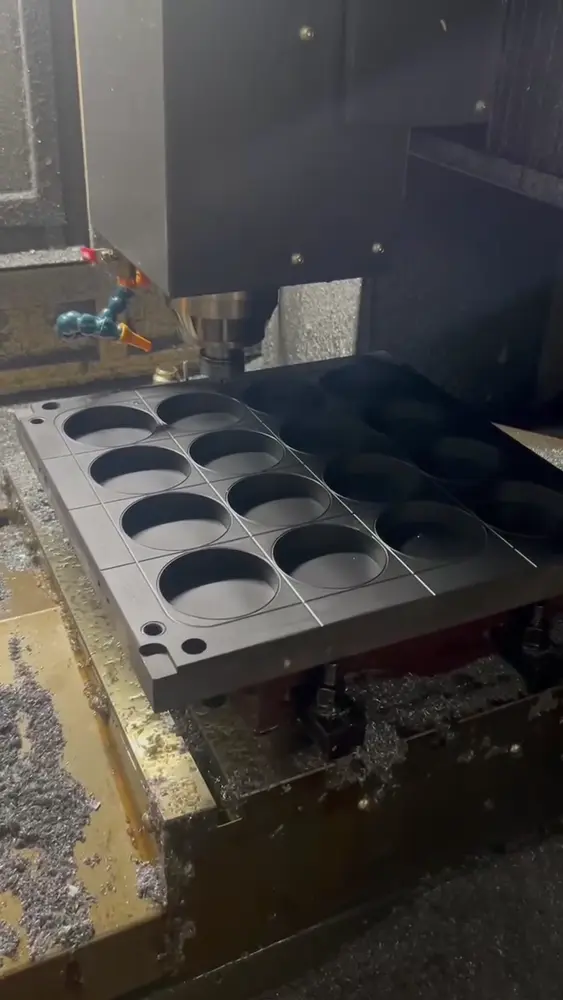
The molded surface can reproduce tool features. Determine whether the marks are present in the cavity and whether they fall on a functional or cosmetic surface.
Compare a cavity photograph with the same location on an unhandled sample.
Decision to agree: Review finishing access and the agreed appearance standard before requesting blanket polishing.
Back to the questions ↑Can two tool surfaces create different gloss on one silicone part?
Different finish conditions can produce visible boundaries. Decide whether the contrast is intentional, acceptable or detrimental to the product appearance.
Mark each surface zone and provide an approved reference.
Decision to agree: Review transitions between finishes as carefully as the finish within each zone.
Back to the questions ↑Will texturing make a silicone part harder to demold?
Texture can change surface contact and release behavior. The result depends on the texture, geometry, material and direction of extraction. Do not approve appearance in isolation from release.
Provide texture depth or a reference and the planned release direction.
Decision to agree: Validate the textured feature before committing all tool surfaces.
Back to the questions ↑How do I keep silicone logo details readable after molding?
Review actual letter size, spacing, relief direction and surface finish. A logo that looks sharp on a large screen can become unclear at product scale.
Send vector artwork and a printout at the intended size.
Decision to agree: Approve readability on a finished sample under ordinary viewing conditions.
Back to the questions ↑Can a scratch on the mold appear on every silicone part?
A local surface defect may repeat in molded parts, but handling damage can look similar. Compare fresh unhandled samples from the same cavity with the corresponding tool surface.
Record cavity identity and the defect position.
Decision to agree: Repair the confirmed source and check that the correction does not change a critical profile.
Back to the questions ↑Why do silicone parts show uneven color even when the mold looks clean?
Appearance variation can involve compound preparation, contamination, process conditions or surface finish. A tool-only explanation should be tested against material and run records.
Retain samples with material batch, cavity and processing information.
Decision to agree: Investigate systematically before changing the steel or the color target.
Back to the questions ↑Can I add a logo after the compression tool is finished?
A later engraving or insert may be possible if access, remaining material and the surface requirements permit it. The change can affect release or appearance around the mark.
Provide final artwork, location and required relief depth.
Decision to agree: Request a scoped modification with a confirming sample approval.
Back to the questions ↑What is a useful cosmetic approval sample for tooling acceptance?
It should represent the agreed material, finish and processing route and be identified by revision. Record what the sample approves and what it does not, such as function or documentation.
Label approved surfaces and relevant viewing conditions.
Decision to agree: Use the same reference at trial and incoming inspection to avoid changing expectations.
Back to the questions ↑Put the answers into your project
Use these questions to structure a discussion about your own drawing. Feasibility, price, tool life and acceptance depend on the agreed part, compound, equipment and verification scope. This guide provides planning questions rather than project-specific guarantees.
Explore the relevant tooling service →Open the procurement checklist · Browse the full knowledge center
Editorial method: AI-assisted drafting organized around buyer decisions and public process references. Review project-specific technical requirements with the responsible engineer. Sources and editorial approach.