Better silicone parts
start with
better tooling.
Custom steel molds for solid silicone rubber. A considered approach to mold design, machining and production readiness.
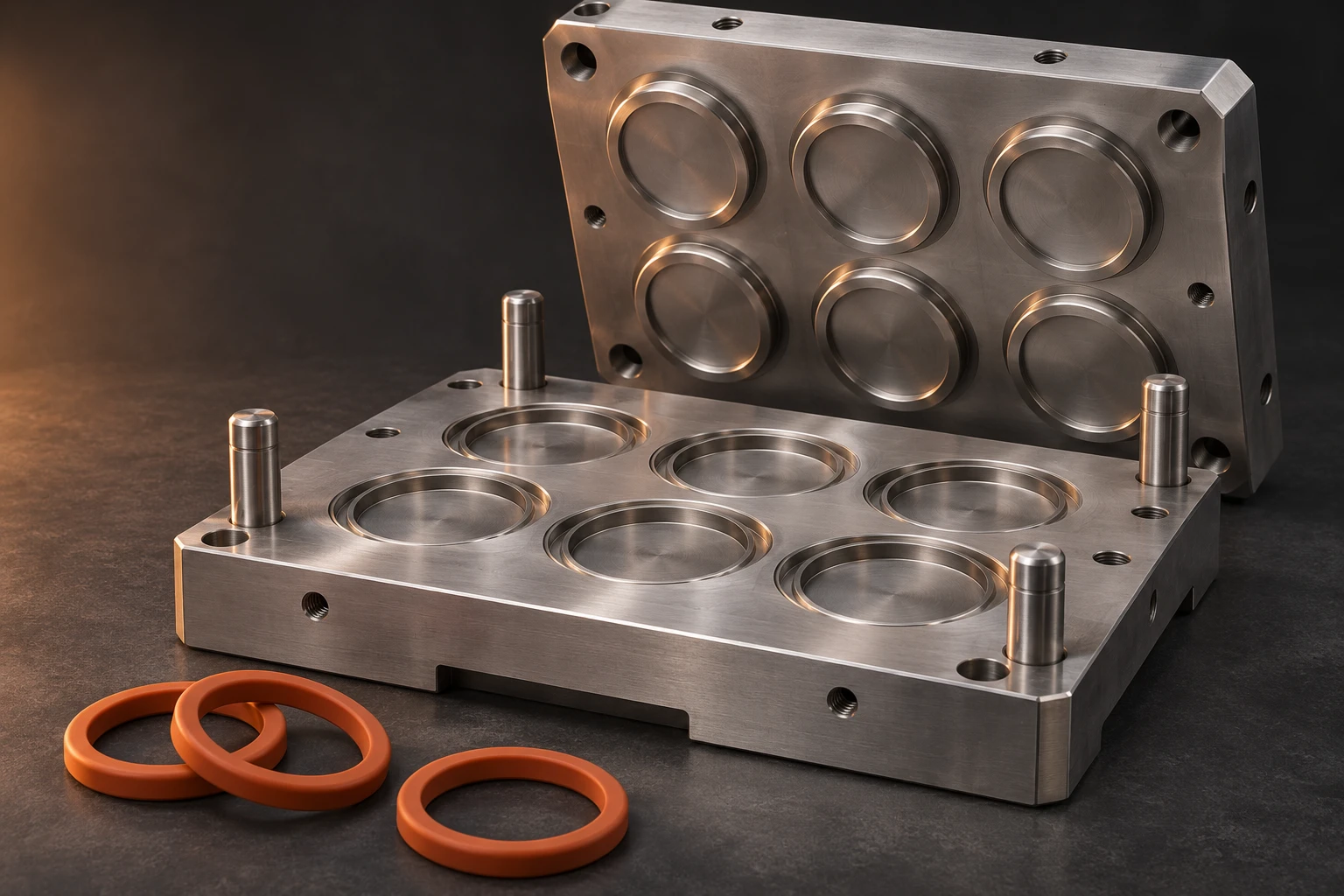 WYD / TOOLING IN FOCUSAI-generated tooling concept · illustrative
Real machining.
A closer look at the details.
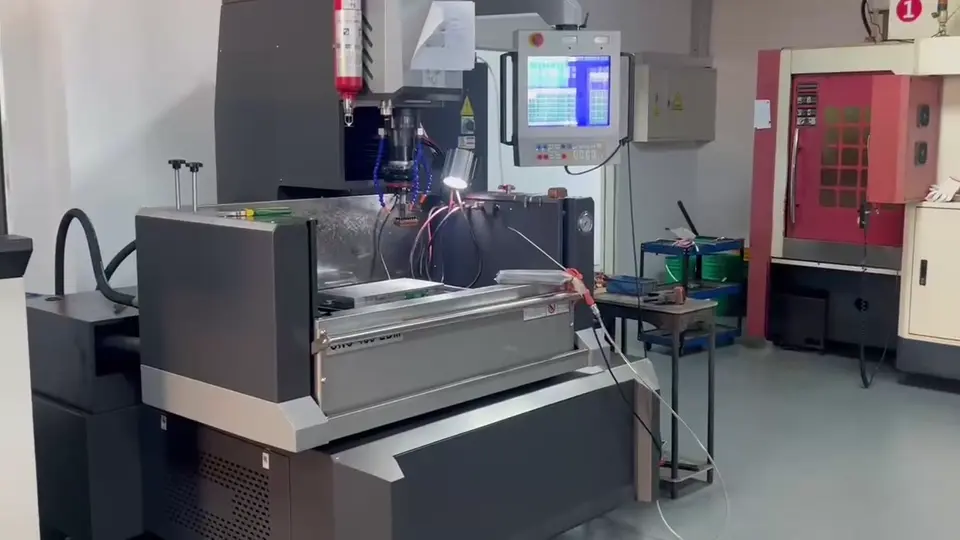 Watch the workshop footage ↗
See the workshop and CNC machining process, then explore what matters for your custom tool.
From a first drawing to a mold trial, make each decision around your part, your press and the evidence needed for approval.
Explore the workshop →Start with the question
you need answered.
What makes a silicone compression mold expensive?
Compare the scope behind the price before choosing a cheaper mold.
Explore the answer →02 / BUYER QUESTIONSWhy does a silicone part tear during demolding?
Review geometry, release direction and material behavior together.
Explore the answer →03 / BUYER QUESTIONSWill a custom compression mold fit your existing press?
Send machine-interface information before the mold layout is frozen.
Explore the answer →04 / BUYER QUESTIONSCan an existing silicone steel mold be modified?
Separate a feasible steel change from a risky promise to reuse everything.
Explore the answer →05 / BUYER QUESTIONSWho owns the mold, and what should a tooling handover include?
Put ownership, storage and transfer deliverables into the quotation.
Explore the answer →06 / BUYER QUESTIONSCan you quote a silicone mold without a STEP file?
Learn what a photo, sample or 2D drawing can establish before final tooling.
Explore the answer →One material family.
Every tooling detail.
Focused on the steel molds behind solid silicone products, from the first design questions to the final tooling scope.
Silicone compression molds
Steel tooling shaped around your part geometry and production needs.
- Part geometry review
- Mold separation planning
- Cavity layout discussion
Mold design & DFM
Resolve the important manufacturing questions before cutting steel.
- Parting-line assessment
- Release & undercut review
- Critical feature discussion
Precision mold machining
A considered path from approved mold design to finished tooling.
- Machining strategy
- Surface finish requirements
- Inspection & trial planning
Different parts.
A considered approach.
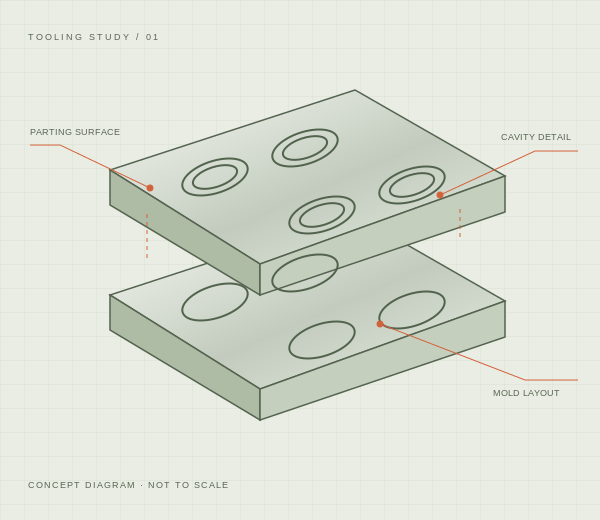
Explore illustrative tooling studies. Each highlights the engineering questions a real project needs to answer.
Design studies only. These illustrations do not represent completed customer projects or guaranteed mold specifications.
The small details
make the difference.
A mold is more than the shape of a cavity. It is a set of decisions about how your part fills, cures and releases.
Put the parting line in the right place
Review cosmetic surfaces, functional edges and the trimming approach together.
Design around release
Discuss undercuts, delicate features and handling before the structure is finalized.
Define what needs to be measured
Agree on critical dimensions and acceptance criteria early in the project.
From your drawing
to your production floor.
Four stages to make the project scope, engineering decisions and verification process easier to follow.
Share the part
Start with drawings, silicone material and your intended production setup.
Review the details
Discuss mold layout, release, critical dimensions and the quotation scope.
Build the tooling
Move from approved design to machining, finishing and mold assembly.
Verify & refine
Agree on trial conditions, sample checks and any adjustments before delivery.
Confidence comes
from clarity.
Turn “high quality” into requirements that can actually be reviewed.
Explore the project approachUseful answers.
Before the first quote.
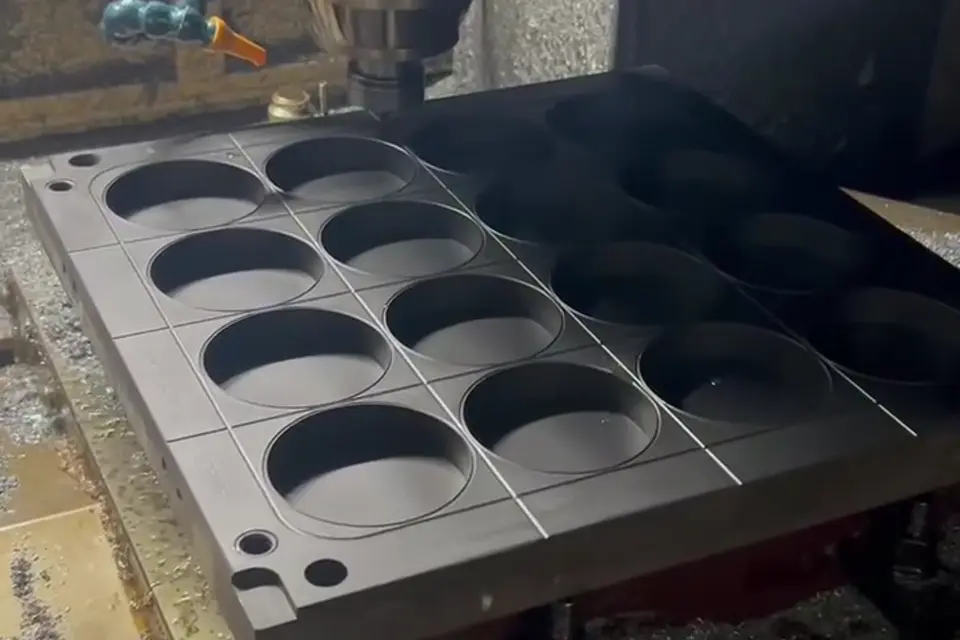 WORKSHOP FOOTAGE
What to send for a silicone compression mold quotation
A practical RFQ checklist that turns a part drawing into a clearer, more comparable tooling proposal.
Read the guide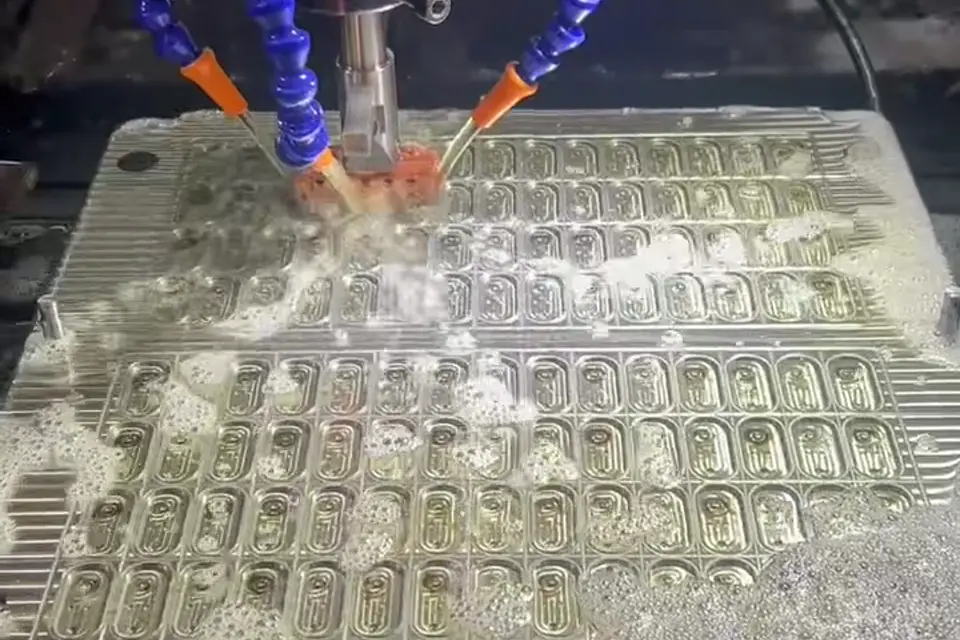 WORKSHOP FOOTAGE
Compression vs LSR injection tooling: what changes?
Separate material, process and equipment before comparing the cost of two silicone mold proposals.
Read the guide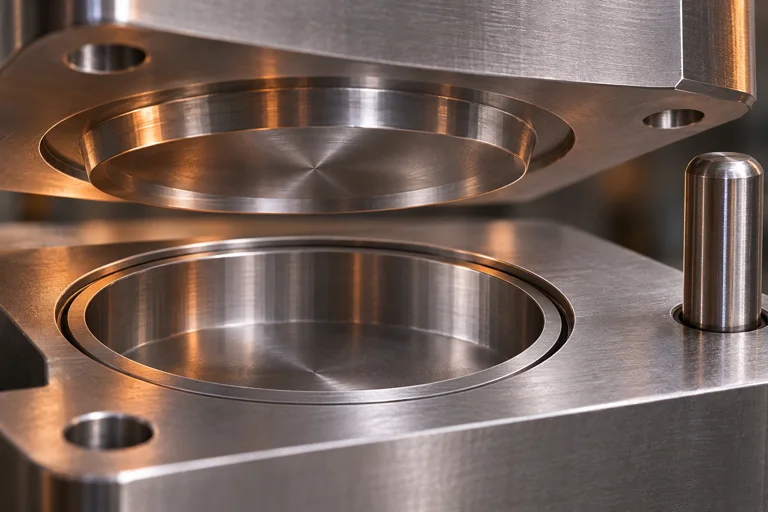 CONCEPT VISUAL
Parting lines, flash and venting: a design review checklist
Connect mold separation to the surfaces your customer sees, touches and relies on.
Read the guideGood questions.
Clearer decisions.
Some of the practical details to consider when sourcing silicone compression tooling.
Do I need a finished 3D drawing to start?
A STEP file and a dimensioned 2D drawing provide the strongest starting point. If you only have a sample or a concept, describe it in your brief so the engineering work can be scoped separately.
What information affects the mold quotation?
Part size and geometry, cavity count, mold steel, surface requirements, critical tolerances, expected production and the trial or delivery scope all affect the quotation.
Is this a silicone mold or a steel mold?
This website focuses on metal tooling used to compression-mold solid silicone rubber parts. Flexible silicone molds for casting plaster, wax or resin are a different product category.
Can you match the mold to our press?
Machine compatibility needs a review of your press data, platen and mounting dimensions, available daylight, heating arrangement and operating requirements. A machine model alone may not be sufficient.
How are tolerances and trial samples agreed?
Identify the critical dimensions and inspection method on the drawing. Mold dimensions and finished silicone part dimensions are different considerations; achievable results depend on material, shrinkage, geometry and molding conditions.
How do I send a project in this preview?
Use the quote brief builder to download a text summary. This review version does not upload drawings or send emails. Production form delivery and company contact details must be configured before launch.
Your next silicone part.
Let’s start with the mold.
Prepare your drawings, application and production requirements.